
Condition
Shockwave Therapy
Non-invasive. Clinically proven. No surgery, no downtime.
Shockwave therapy is one of the most effective treatments available for chronic foot and ankle pain. If you’ve been dealing with persistent heel pain, tendon problems, or a nagging injury that hasn’t responded to rest or other conservative treatments, shockwave therapy may be the solution you’ve been looking for.
At Collective Footcare and Orthotics, we are one of the few foot clinic that are able to offer two types of shockwave therapy — radial and focused — allowing us to tailor treatment to your specific condition and how deep the problem lies.
How Shockwave Therapy Works
Shockwave therapy delivers high-energy pressure waves to injured or degenerated tissue. These waves stimulate the body’s natural healing response by increasing blood flow, breaking down scar tissue and calcifications, and triggering the growth of new blood vessels and connective tissue.
It’s particularly effective for conditions that have become chronic — where the body’s normal healing has stalled and the tissue is stuck in a cycle of pain and degeneration. Shockwave essentially “restarts” that healing process.
Two Types of Shockwave — What’s the Difference?
Radial Shockwave Therapy
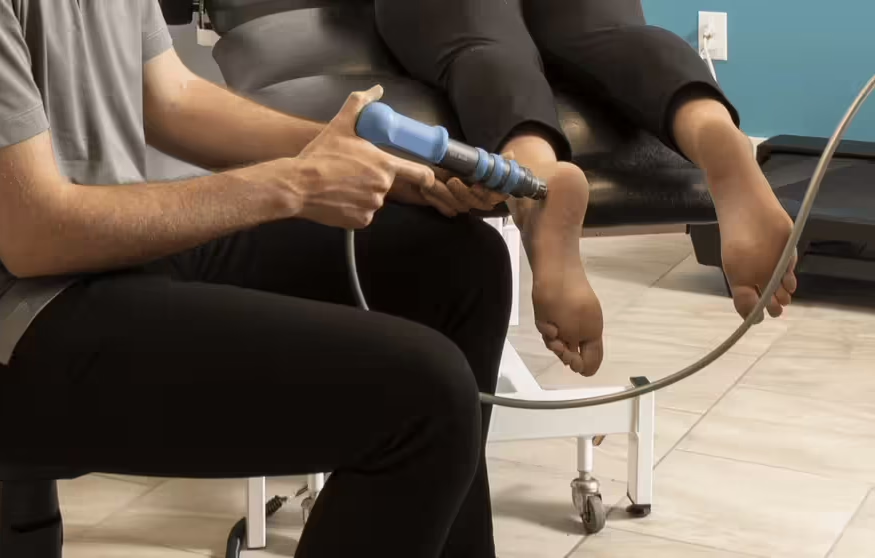
Radial shockwave delivers pressure waves that spread outward from the tip of the applicator, covering a broader treatment area near the surface of the skin. It’s well-suited for larger, more superficial areas of soft tissue involvement.
Best for:
- Plantar fasciitis
- Achilles tendinopathy
- Shin splints
- General heel pain
- Broad areas of soft tissue tension or chronic pain
Radial shockwave is our standard shockwave offering and is an excellent first-line option for many patients with chronic foot and ankle conditions.
Focused Shockwave Therapy
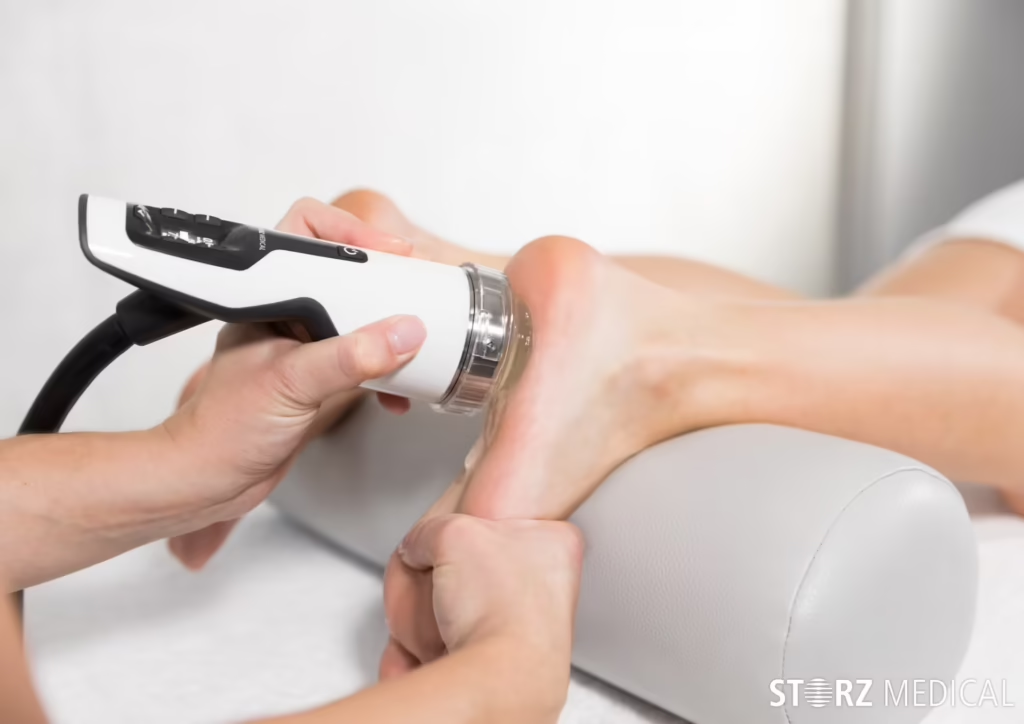
Focused shockwave uses advanced technology to concentrate energy at a precise point deep within the tissue — up to several centimetres below the skin’s surface. Unlike radial shockwave, the energy doesn’t dissipate as it travels; it’s delivered exactly where it’s needed.
At Collective Footcare, we use the Storz Duolith SD1 — a medical-grade focused shockwave machine used in elite sport and clinical settings worldwide.
Best for:
- Plantar fasciitis (particularly chronic or treatment-resistant cases)
- Morton’s neuroma
- Peroneal and tibialis posterior tendinopathy
- Retrocalcaneal bursitis
- Medial arch pain
- Deep, localized soft tissue conditions that haven’t responded to radial shockwave or other treatments
Focused shockwave is the more advanced option, and is ideal when precision targeting is needed or when a condition has been unresponsive to conventional treatment.
Conditions Treated with Shockwave Therapy
Shockwave therapy is effective for a wide range of chronic musculoskeletal conditions, including:
- Plantar fasciitis
- Achilles tendinopathy
- Heel spurs and retrocalcaneal bursitis
- Morton’s neuroma
- Peroneal tendinopathy
- Tibialis posterior tendinopathy
- Medial arch pain
- Chronic soft tissue injuries that have failed to heal with conservative care
If you’re unsure whether your condition is a good fit, our chiropodists will assess you thoroughly before recommending shockwave as part of your treatment plan.
What to Expect
Before Your Session
Your chiropodist will complete a thorough assessment of your condition and determine which type of shockwave is most appropriate, sometimes we use both! We’ll explain what to expect and answer any questions you have.
During Your Session
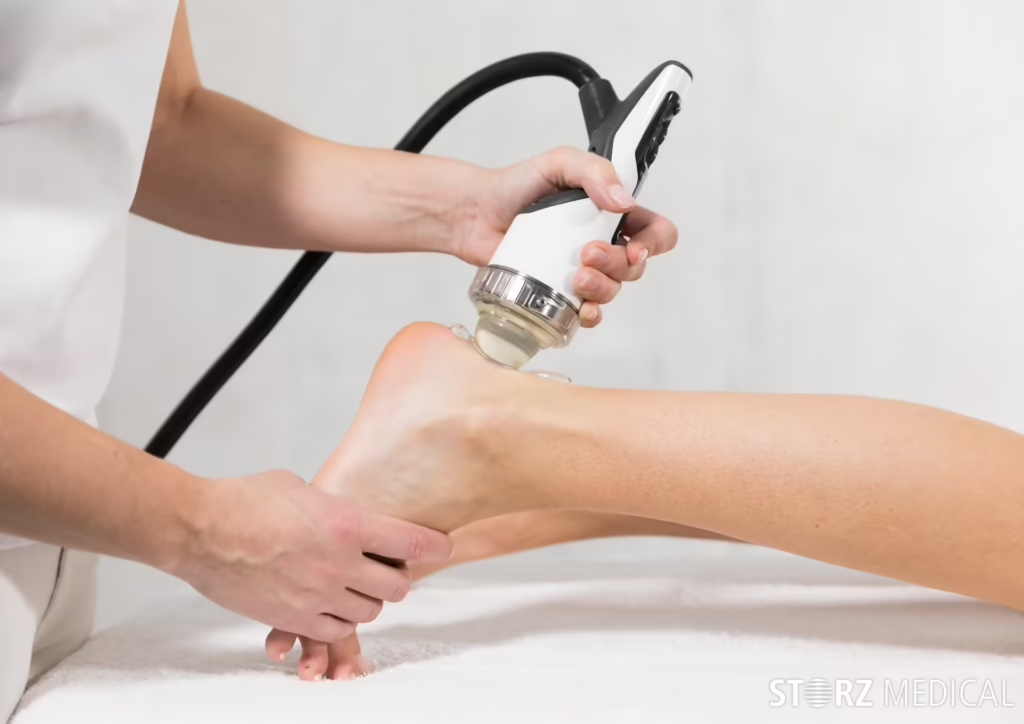
Your chiropodist will complete a thorough assessment of your condition and determine which type of shockwave is most appropriate, sometimes we use both! We’ll explain what to expect and answer any questions you have.
After Your Session
You can return to normal daily activities immediately. We recommend avoiding high-impact activity for 48–72 hours following treatment. Some patients notice improvement after their first session; for others, results build progressively over the course of treatment.
Important: Avoid anti-inflammatory medications (such as Advil or Naproxen) for at least one week before and four weeks after treatment, as inflammation is part of the healing response that shockwave is designed to stimulate.
How Many Treatments Will I Need?
Most patients require 3 to 6 sessions, spaced approximately one week apart. Chronic or complex conditions may benefit from additional sessions. Your chiropodist will monitor your response and adjust the treatment plan accordingly.
Research shows that shockwave therapy achieves success rates of 80% or higher across the conditions it’s used to treat — making it one of the most evidence-backed non-surgical options available for chronic foot pain.